Recent comments in /f/philosophy
pokoponcho t1_j20qcba wrote
Reply to comment by 42fy in An Argument in Favour of Unpredictable, Hard Determinism by CryptoTrader1024
Thank you for the excellent comment.
In my view, a human as a whole - body, thoughts, actions, etc. - at each moment is a dynamic product of genetics, life experiences, and external circumstances (or, more precisely, external influences). The last two elements are ever-changing and interact between themselves and our genetic structure.
We think that we have free will because we have more choices compared to, let's say, a stone. But our free will is an illusion because a human's reactions are as pre-defined as stone's.
Jingle-man t1_j20q1t9 wrote
Reply to comment by GrymanOne in An Argument in Favour of Unpredictable, Hard Determinism by CryptoTrader1024
>If not my own choice, was it my own action?
Of course! Why wouldn't it be?
CryptoTrader1024 OP t1_j20ps5e wrote
Reply to comment by XiphosAletheria in An Argument in Favour of Unpredictable, Hard Determinism by CryptoTrader1024
again, you seem to fundamentally not understand the problem. What are your choices? They are comprised of some set of neurons firing in one way or the other. Why do those neurons fire the way they do? well, their reactions are electrochemical, based on the strength of the stimulus in and out, and the relative amplification, or damping of the signal within the neuron. This all follows physical laws.
Now tell me... where, in this web of firing neurons is the "choice" exactly? everything just reacts to a prior cause, including all the parts of your brain. Unless, as I've stated before, you are willing to argue that the brain is magic, and is not beholden to these laws.
This is the opposite of an argument from ignorance. I'm not saying "I have no idea how free will could work", I'm saying that based on everything we know about how the brain works, and how physics works, the illusion of choice does not translate to actual choice.
swarthybangaa t1_j20ozpx wrote
Reply to comment by iceyed913 in Life is a game we play without ever knowing the rules: Camus, absurdist fiction, and the paradoxes of existence. by IAI_Admin
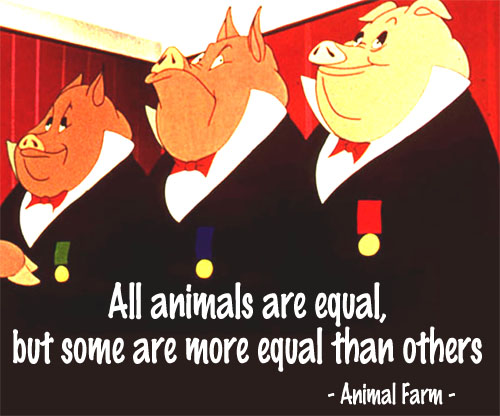
The balance of probabilities makes some more equal than others, therein lies the problem we're forced to accept
iceyed913 t1_j20ofx6 wrote
Reply to comment by Usernametaken112 in Life is a game we play without ever knowing the rules: Camus, absurdist fiction, and the paradoxes of existence. by IAI_Admin
In and of itself randomized outcomes to similar situations do provide equality. It is not much of a comfort on an individual level however
tokmer t1_j20oeoh wrote
Reply to comment by Studstill in An Argument in Favour of Unpredictable, Hard Determinism by CryptoTrader1024
If you right now appeared in front of a set of doors and had to choose one to go through, you would choose a certain door.
If we then wiped your memory and reset the door simulation you would choose to go through the same door every time you were forced to go through the simulation.
Nobody is trying to measure how much you like apples
Studstill t1_j20nmbi wrote
Reply to comment by tokmer in An Argument in Favour of Unpredictable, Hard Determinism by CryptoTrader1024
How are you measuring how much I like apples?
How are you stating I would do "the same thing everytime"?
iwantabjthrowaway t1_j20nm12 wrote
Reply to comment by who519 in Life is a game we play without ever knowing the rules: Camus, absurdist fiction, and the paradoxes of existence. by IAI_Admin
Everybody stop philosophy - this guy figured it out.
Garacious t1_j20n53r wrote
Reply to comment by XiphosAletheria in Life is a game we play without ever knowing the rules: Camus, absurdist fiction, and the paradoxes of existence. by IAI_Admin
So... capital. Money is a symbol for capital. Its amazing how much of a selective reader you are. Also if you read your own comment a few more times you can see that trade is an important element of wealth. People trade their wealth with each other, so no one actually creates wealth out of thin air.
Jingle-man t1_j20m3p2 wrote
Reply to comment by YuGiOhippie in An Argument in Favour of Unpredictable, Hard Determinism by CryptoTrader1024
No: the elements of the universe follow necessarily from each other, can not be anything other than they are. But the very fact that anything is at all is unnecessary in that there might as well be nothing. The drama follows a necessary path, but the drama itself is an unnecessary phenomenon. There doesn't need to be a universe. But there is. And that's beautiful.
kraoard t1_j20lxi1 wrote
Reply to Life is a game we play without ever knowing the rules: Camus, absurdist fiction, and the paradoxes of existence. by IAI_Admin
You may be knowing the rules but try to hide them somewhere in your brain for sake of your convenience.
XiphosAletheria t1_j20lufh wrote
Reply to comment by Garacious in Life is a game we play without ever knowing the rules: Camus, absurdist fiction, and the paradoxes of existence. by IAI_Admin
Money isn't wealth - it's just a symbol for it, so you don't have to barter item for item. Wealth is what the money stands for - which is basically anything people are willing to trade you for.
BrianW1983 t1_j20lmw7 wrote
Reply to comment by keten in Life is a game we play without ever knowing the rules: Camus, absurdist fiction, and the paradoxes of existence. by IAI_Admin
Fair enough.
keten t1_j20kyx1 wrote
Reply to comment by BrianW1983 in Life is a game we play without ever knowing the rules: Camus, absurdist fiction, and the paradoxes of existence. by IAI_Admin
Well I'm wagering it on ice cream
Funoichi t1_j20jwfa wrote
Reply to comment by XiphosAletheria in Life is a game we play without ever knowing the rules: Camus, absurdist fiction, and the paradoxes of existence. by IAI_Admin
And the ceo of the company gets their share, right? No they get significantly more.
XiphosAletheria t1_j20jizx wrote
Reply to comment by CryptoTrader1024 in An Argument in Favour of Unpredictable, Hard Determinism by CryptoTrader1024
No, I am saying that the universe is deterministic. Its basic particles don't have choices. A ball bearing pushed rolling down a forking path at a particular angle must go left. A person starting on the same path will see that it forks, will recognize that there is a choice, and may shift right instead. You argue that the "choice" is an illusion, because you can't explain how a non-choosing system gave rise to choosing beings. That's fine. I've seen people say the same of consciousness, and even (more rarely) of life. But the truth is that that in all cases amounts to no more than an argument from ignorance, a sort of fit of pique because science not only doesn't explain any of these things very well but probably can't.
Funoichi t1_j20jf1f wrote
Reply to comment by D_Welch in Life is a game we play without ever knowing the rules: Camus, absurdist fiction, and the paradoxes of existence. by IAI_Admin
Im sure the child workers in the vein of matchstick girl would be super enthusiastic that they had been saved from those awful dark ages.
Garacious t1_j20j91a wrote
Reply to comment by XiphosAletheria in Life is a game we play without ever knowing the rules: Camus, absurdist fiction, and the paradoxes of existence. by IAI_Admin
Okay let me ask something else, what do you think wealth is? Cause i feel like we are talking about completely different things. When i say wealth, i mean the money (or the capital) you own and i think a lot of people will agree with me on that. Also for the book example, you know preordering is a thing right?
pokoponcho t1_j20j8bu wrote
Reply to comment by InTheEndEntropyWins in An Argument in Favour of Unpredictable, Hard Determinism by CryptoTrader1024
Let me elaborate.
Each human as a whole - body, thoughts, actions, etc. - is a dynamic product of genetics, life experiences, and external circumstances (or, more precisely, external influences). The last two elements are ever-changing and interact between themselves and our genetic structure.
So, back to our example: the toddler chooses a banana over an apple. Why?
There can be many obvious and not obvious reasons for that choice.
Maybe it's color or taste or neuro association in the child's brain or whatever.
What matters is t-1 moment before the first *choice*, the combo of genetics, life experiences, and external circumstances was out of the toddler's control. And that combo made the toddler choose a banana over an apple.
So, why do we call it free will if the toddler had no control over choosing a banana or apple?
A human's existence from conception to death is a sequence of moments -- seconds, milliseconds, and so on. Do we agree that up until some moment, a human cannot exercise a free choice? What free choice a newborn baby has?
Can we also agree that up to the moment of the first manifestation of what we view as a free choice, the prior moment has a combo of genetics, life experiences, and external circumstances that are out of the child's control?
Each process and action has a beginning and end within a human's lifetime. So, what moment can we define as the beginning of free will?
In other words, can we define a moment when a person separates himself from a combo of genetics, life experiences, and external circumstances?
BernardJOrtcutt t1_j20j6pl wrote
Reply to Life is a game we play without ever knowing the rules: Camus, absurdist fiction, and the paradoxes of existence. by IAI_Admin
Please keep in mind our first commenting rule:
> Read the Post Before You Reply
> Read/listen/watch the posted content, understand and identify the philosophical arguments given, and respond to these substantively. If you have unrelated thoughts or don't wish to read the content, please post your own thread or simply refrain from commenting. Comments which are clearly not in direct response to the posted content may be removed.
This subreddit is not in the business of one-liners, tangential anecdotes, or dank memes. Expect comment threads that break our rules to be removed. Repeated or serious violations of the subreddit rules will result in a ban.
This is a shared account that is only used for notifications. Please do not reply, as your message will go unread.
Funoichi t1_j20iqao wrote
Reply to comment by Ibbot in Life is a game we play without ever knowing the rules: Camus, absurdist fiction, and the paradoxes of existence. by IAI_Admin
Certainly I don’t want employers earning a profit off of the work of their employees. Certainly no more than they are making at maximum.
The value that each person contributes would have to be tallied and paid in full. It was a simplistic example.
Someone receives the books and someone buys new ones, I guess you have to chop the value of each book sold into pieces.
That’s kind of a coop model. Then if you want to go full socialism, the workers own the means of production so there’s no books to buy or utilities to pay.
XiphosAletheria t1_j20i9li wrote
Reply to comment by Garacious in Life is a game we play without ever knowing the rules: Camus, absurdist fiction, and the paradoxes of existence. by IAI_Admin
>What im trying to say is, wealth and value are seperate things. Of course wealth can be produced and grown, im not arguing that. But to produce that wealth, first someone needs to agree on the value you placed on something, and they need to actually give you their wealth in order for you to produce it.
Why? You don't normally pay the author of a book you buy for the book before you buy it, do you?
>Can you answer me how can one generate wealth, or money, without someone else giving up their own wealth?
The same way one produces anything - through their own productive effort.
Funny-Spray9728 t1_j20hsa2 wrote
Reply to comment by Hehwoeatsgods in Life is a game we play without ever knowing the rules: Camus, absurdist fiction, and the paradoxes of existence. by IAI_Admin
Not just physical…
XiphosAletheria t1_j20hmq2 wrote
Reply to comment by Funoichi in Life is a game we play without ever knowing the rules: Camus, absurdist fiction, and the paradoxes of existence. by IAI_Admin
>If I work at a bookstore and sell 10 $10 books, I do not receive $100. That’s what it means for a worker to receive the full value of the work they do. What would the business owner get under this arrangement, don’t know, the value of whatever books they sell also.
Then you have merely failed to understand the value of labor. The value of the labor of a clerk at a bookstore is not equal to value of the books she sells. The value of the book is precisely the sum of the values added by the author, the publisher, the distributors, the bookstore, and, yes, even the sales clerk. She gets compensated for her portion of that value.
Studstill t1_j20r3mk wrote
Reply to comment by tokmer in An Argument in Favour of Unpredictable, Hard Determinism by CryptoTrader1024
I understand the situation you keep stating.
I'm not seeing how you are stating it as such.
Why would I go through the same door everytime?
What if one of the doors had an apple on it?
How are the atmospheric conditions always identical? (oh, because this is a simulation*, you said, my bad)
How does determinism apply to non-particle interactions, specifically how is this being stated?
Edit: Maybe I see, so this is simulation theory masquerading as "determinism".