Recent comments in /f/history
Abject_Ad1879 t1_j2bl0pv wrote
In the paranoid years of the Cold War, countries had to either be aligned either to the West (US, NATO, Japan, Australia, etc.) or East (Soviet Union or Eastern Block Countries). In the 1950's, Iran voted in Mosadeq--who wanted to nationalize oil production for the benefit of Iran rather than BP's shareholders. With the help of the CIA Mosadeq was ousted and the Shah was installed. The Shah plundered Iran, and the secret police were everywhere. I think the biggest thing that Iranian's were feeling was 'Yay, we got rid of the Shah' and were very optimistic for independence from being a Cold War pawn. Unfortunately, the student's taking US Embassy workers hostage and the return of Kohemeni (and his hardline views) did not have the 'silver lining' that many Iranians still want today.
jrhooo t1_j2bkzqp wrote
One point to bring up that may be missed here,
WHY would an officer use a sword during the gunpowder era? (specifically an infantry officer with a line unit, NOT a cavalry officer)
The answer to that question speaks directly to the likelihood of ever seeing sword vs sword combat.
And the answer is: Self Defense.
An officer's sword in that era served the same conceptual role as a pistol in the era after it.
An extremely close range, personal defense sidearm.
See, an officer wouldn't carry a rifle in those days. Rifles were for the infantrymen on the line to shoot at the enemy.
Its NOT the officer's job to shoot at the enemy.
Its the officer's job to stand back, supervise, direct, coordinate.
To draw an analogy, you can't be conducting the orchestra is you're too busy trying to play one of the violins.
An officer trying to stand on the line and pick off the enemy probably isn't properly doing his job of directing his men.
So officers don't need rifles.
BUT... what happens when the battle goes really badly, and now the enemy is overrunning your position?
Now that officer needs something to defend themself with.
A rifle... maybe not the best option. Not the ideal weapon for close quarters melee distance, and too big and cumbersome to carry around all the time in case anyways.
Nope, but if the enemy breaks through and gets into arms reach, every man clawing and stabbing at each other distance... pistols and swords become VERY useful.
And THAT is why swords and pistols became associated with officers/leadership positions.
In the modern firearms era, we DO see officers start to carry traditional firearms, but even then, we still get hints of the "not a line troop" nature of those weapons. Example, WWI it might common to see leaders carrying pistols more so than rifles. By WWII you might certainly see officers carrying rifles, since they were less cumbersome than they used to be, but even then, by T/O you would typically see officers with something more like an M1 Carbine or Thompson Sub. Smaller, lighter, easier to carry, shorter effective range, but higher rate of fire. You're not picking off enemy soldiers at a distance, but if the bad guys overrun your lines and start storming the HQ tent, you have enough close up firepower to kill everyone coming through the door, and/or maybe blast your way out of there.
Interesting tidbit that I can't speak to as confirmed fact, but I have heard referenced by a lot of the old Vietnam era vets; shotguns. So, even in the Vietnam era, some officers carried pistols, some M16s, but then shotguns got popular. With the whole "personal defense weapon" idea in mind, the saying/logic was "LT, if some sh** ever goes bad enough that YOU have to reach for your pistol, you're gonna wish you had a shotgun."
Except...
>And THAT is why swords and pistols became associated with officers/leadership positions.
Of course, a lot of other officers decided they DID want to just carry an M16 like everyone else, because in a Vietnam style of war snipers were a constant fear, and you didn't want to wear/carry anything that made you look like "someone special" from a distance.
TL;DR:
Sword on sword combat in the rifle/musket era seems like it would be a reasonably uncommon battlefield occurrence.
Foot officers really only carried swords as personal defense weapons. It wasn't their job to directly engage the enemy troops.
Thus, if an officer was in the thick of it, hacking away at the enemy, he was likely either
A. Leading his men on a charge through the enemy lines
B. (most likely) desperately trying to fend off the enemy that was overrunning his own position.
In either case, A or B, said officer was probably fighting some untold number of riflemen, NOT seeking out his equal opposite across the field for a gentlemen's sword duel. (which still isn't to say that officers didn't learn and train single sword combat, just saying it wouldn't be all that battlefield relevant)
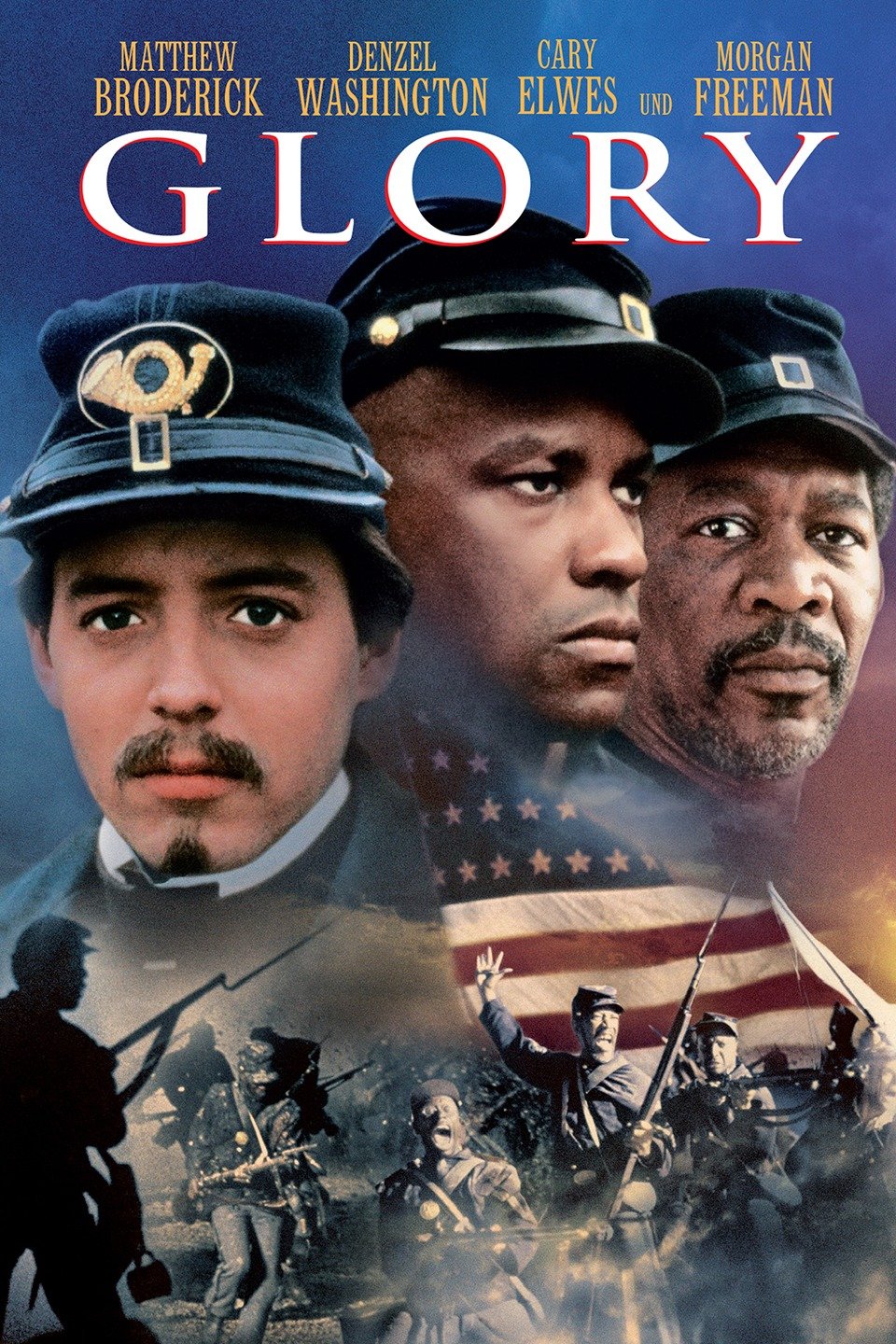
Hmm... In a nice little "Hollywood got that right" moment - IIRC in the 1989 Civil War move "Glory" Matthew Broderick plays a Union officer, and there was a scene of him practicing with his sword. They did NOT show him practice man to man fencing against some fencing dummy. Instead they showed him on horseback, chopping the melons off the tops of a line of fenceposts at a gallop, as if riding through a crowd of enemy, taking out men on the ground. Nice job, director guy
One more note:
>And THAT is why swords became associated with officers/leadership positions.
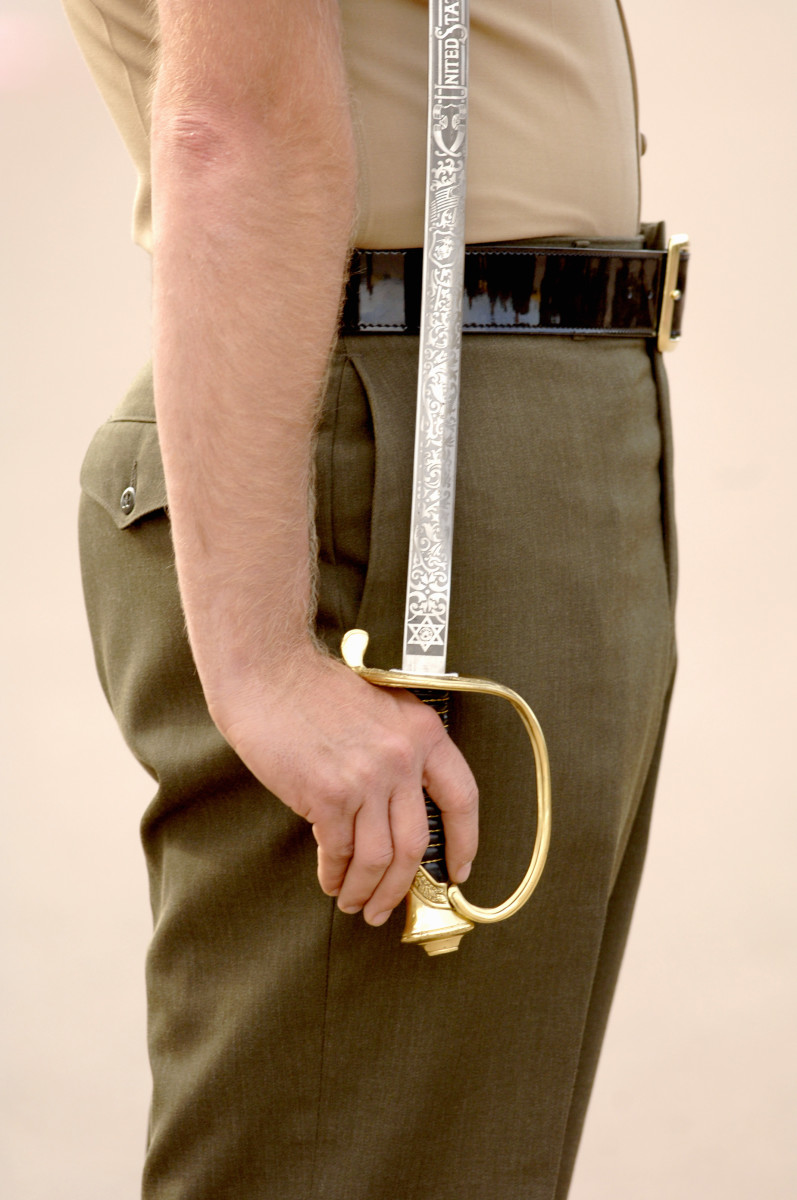
That is why it was a big deal in the U.S. Marine Corps, for them to issue the "NCO Saber". The very existence and issuance of a sword for non-commissioned officers, i.e., Corporals and Sergeants, was an acknowledgement that the Marine Corps saw NCOs as unit leaders, with leadership duties and authorities. NCOs could be "in charge" of people and missions. This is a concept that wasn't common in a lot of services, and still isn't fully accepted in some militaries today. Which is to say, almost all militaries have ranks equivalent to Cpls and Sgts, but NOT all militaries have a culture of entrusting Cpls and Sgts with true managerial authorities and responsibilities)

SillyCubensis t1_j2bku8c wrote
Reply to comment by surveyorandrew in Fencing or swordsmanship during the during the American revolution by Unable-Anybody-2285
Great sources, thanks.
madmrmox t1_j2bjir9 wrote
In a military context, let us consider obsolete to mean no longer issued to line infantry. Which pushes it back quite a way, to the advent of the socket bayonet, and arguably further. But (like the partisan) swords were issued to to officers in a semi ceremonial way--as batons, as a symbol of authority. And officers have kept the, basically to his day as such.
TheDakestTimeline t1_j2bgfrr wrote
Reply to comment by jrhooo in Fencing or swordsmanship during the during the American revolution by Unable-Anybody-2285
Muzzle Thump is a good band name
Kronzypantz t1_j2bgej2 wrote
Reply to comment by Kevin_Uxbridge in Fencing or swordsmanship during the during the American revolution by Unable-Anybody-2285
Bet the guys in first, second, and third didn’t push replacing their nation’s Calvary sabers with their own pet project though
Kevin_Uxbridge t1_j2bg6ed wrote
Reply to comment by BrightGreyEyes in Fencing or swordsmanship during the during the American revolution by Unable-Anybody-2285
> Modern militaries still use edged weapons ...
According to my buddy, his marine training basically came down to 'sneak up, stab stab stab, run away'.
Kevin_Uxbridge t1_j2bg0z9 wrote
Reply to comment by Kronzypantz in Fencing or swordsmanship during the during the American revolution by Unable-Anybody-2285
Patton placed forth in the fencing portion of the 1912 Olympics Pentathlon. That's a good get.
FatherD00m t1_j2bfvlb wrote
Reply to comment by zombiepirate in Fencing or swordsmanship during the during the American revolution by Unable-Anybody-2285
Show off some big D energy. He’d like that I’m sure. At least as the stories go.
MackTUTT t1_j2bfi1v wrote
Tomahawks required little training to be effective in close quarters and their use in the revolutionary war far exceeded that of swords from what I've read.
S-Is-For-Spirit t1_j2bf66f wrote
Reply to Bookclub Wednesday! by AutoModerator
Was curious if anyone had some resources on actual dukes and families that were prominent in London during the regency era? I can’t seem to find much on the topic. Maybe I’m just bad at searching lol
MackTUTT t1_j2bestv wrote
Reply to comment by jrhooo in Fencing or swordsmanship during the during the American revolution by Unable-Anybody-2285
Early 90s, I was told by several of the older guys that an e-tool is better than a bayonet and a couple said a tomahawk is the best melee weapon.
[deleted] t1_j2becye wrote
Reply to comment by surveyorandrew in Fencing or swordsmanship during the during the American revolution by Unable-Anybody-2285
[deleted]
War_Hymn t1_j2bebzd wrote
Reply to comment by ThatGIRLkimT in Hong Xiuquan’s vision of god led him to rebel and establish his own kingdom by urGremanFriedre
He had the advantage of the Qing military at the time being a complete incompetent and corrupt mess, suffering from low pay and poor leadership/organization. They were only able to turn the tide against the rebels by utilizing regional militia/mercenaries known as the yongying that were originally privately raised by affluent local merchants and officials to fight against Taiping intrusion.
jrhooo t1_j2baodg wrote
Reply to comment by Poopy_McTurdFace in Fencing or swordsmanship during the during the American revolution by Unable-Anybody-2285
Correct me if I’m wrong, but is it fair to say, when discussing bayonets before and maybe even up to the US Civil War, that we weren’t even fully graduated from seeing line infantry riflemen as “pikemen that could shoot”.
impossiblefork t1_j2banmj wrote
Reply to comment by Poopy_McTurdFace in Fencing or swordsmanship during the during the American revolution by Unable-Anybody-2285
>Military fencing in the age of powder mostly consisted of mounted saber,
No. Swedes fought with pikes and sword during charges that followed a close-distance volley and the attack with swords was a primary tactic.
There are surely other groups that used similar tactics.
The start of the gunpowder era had pike squares and Spanish had sword fencers in these pike squares, similar to the use of landsknechts in German equivalents.
What I mention is of course a slightly different era, but you make statement without qualifying it so that it isn't false.
jrhooo t1_j2ba1rk wrote
Reply to comment by KarmaticIrony in Fencing or swordsmanship during the during the American revolution by Unable-Anybody-2285
Also, if someone is in melee range with you, even without a bayo, a good muzzle thump to the face will back them off you enough to follow up with whatever next move is appropriate
CapoOn2nd t1_j2b9hps wrote
Can’t speak much about the American revolution but I do know that even in World War One the initial conflict between Britain and Germany was lost by Britain because the unit attempted a cavalry charge at German positions and they got gunned down. That war was not expected to play out like it did. No wonder the best tactic the generals could come up with was to send wave after wave of men over the top of the bunkers, they had no other experience of battle tactics than to charge in.
jrhooo t1_j2b8zmg wrote
Reply to comment by nospamkhanman in Fencing or swordsmanship during the during the American revolution by Unable-Anybody-2285
We definitely learned it in the 2000s.
A few relevsnt points here.
-
They teach bayonet fighting but they don’t spend a ton of time on it.
-
It is still a useful and relevant skill. Reason being, if you can fight with your rifle WITH a bayonet, you can use the same techniques without one. How to se your rifle as a club/bo staff basically. While you are unlikely to find yourself in a full on fixed bayonet charge in the 21st century, you are not that unlikely to find yourself in a position where you need to beat someone down. (Hypothetical example, CQB in a house and some dude jumps on you or your rifle jams or whatever. You may only have enough time and space to buttstroke them to the face. Gotta have the muscle memory tucked away)
-
A GREAT point someone explained to me once. Pugil sticks isn’t all about bayonet technique. Its also about FIGHTING. Its a replacement for boxing.
They USED to have boxing in boot camp. It wasnt actually to teach you how to fight. It was because in a civilized society, a LOT of kids had just never been in a real fight. Throwing them in a boxing ring was a way to give them a taste of hitting someone and being hit.
Problem: Strapping the glives on and punching each other in the head is still dangerous, even in a controlled setting. A few recruits got badly hurt. Maybe died? SO, eventually pugil sticks became a good substitute. A less dangerous way to still throw recruits in the circle and tell them, “well there he is. What are you waiting for? Go get him! Attack!”
BONUS NOTE
One of the silliest and yet not at all silly lessons you got in boot - remember the “weapons of opportunity” class? For the test, they made you demonstrate some strikes with an etool (shovel). Then a tent stake. Thrn a rock.
It felt odd at the time. Like, a little specific isn’t it? Are we getting attacked at a camp site? Are we expecting that nothing but shovels and tent poles will be strewn around the battlefield?
BUT if you think about it, that class is actually pretty clever. Its not about those 3 objects.
Its about the idea that random objects in the world only really come in so many form factors.
So they make you practice :
Something thats like a rock
Something thats like a club
Something thats like a pointy stick
So one day in a real fight, when reach out and grab whatever object is within reach, you’ll have a basic idea of the best way to hold it, the best way to strike with it, and where on the other guy to aim for.
“One mind, any weapon” = you can pick up any ivject in the room and have a pretty good natural undertanding of how to attack someone with it.
sardaukar2001 t1_j2b8d51 wrote
Reply to comment by DarkDoctor_42 in Fencing or swordsmanship during the during the American revolution by Unable-Anybody-2285
I did BCT back in 2008 and we didn't do any bayonet training. We did however do Combatives (grappling) training.
Unable-Anybody-2285 OP t1_j2b7945 wrote
Reply to comment by crazynfo in Fencing or swordsmanship during the during the American revolution by Unable-Anybody-2285
Thanks for this list quick list I did not expect Benjamin Franklin as for George Washington I knew he had some training considering he used to be in the British military before becoming the general of continental army I'm definitely checking this people out
Another question I've got is there examples of just regular people who just joined army at received the sword training went on to become or great at their new skill
Anders_Calrissian t1_j2b5ogp wrote
Reply to comment by Wurm42 in Fencing or swordsmanship during the during the American revolution by Unable-Anybody-2285
All great reading it looks like too, thank you Reddit random poster
Antisocialite99 t1_j2b4oar wrote
Fencing implies two people fighting each other with swords but I think much more often it was swords deployed by officers on foot or by calvary against normal infantrymen armed with muskets and bayonets.
Calvary sabers really aren't designed for fencing primarily they are designed to be held Ina static position while you ride them into someone. The curve is more drastic towards the end meaning when pointed straight ahead at the hilt would then end up about head high with the end of the blade basically perpendicular to the necks it would encounter.
KarmaticIrony t1_j2b3cep wrote
Reply to comment by 5-On-A-Toboggan in Fencing or swordsmanship during the during the American revolution by Unable-Anybody-2285
If someone is in melee range with you and you have rifles, the smart thing to do is push/throw/grapple them or retreat as necessary so you or a buddy can shoot them.
A bayonet on the end of your gun's muzzle makes it longer and heavier which are both a disadvantage in close quarters. Given the first point, it's a sacrifice for no real benefit.
Dazzling-Fail-3847 t1_j2bqh5i wrote
Reply to comment by darwinnerist in Simple/Short/Silly History Questions Saturday! by AutoModerator
Thank you so much!!!! I’ve been searching for so long and couldn’t find anything