Recent comments in /f/headphones
Tanachip t1_j6mw70g wrote
Reply to Converting a non-believer by Perviewted
Hand your friend the Sennheiser HD560s and an apple dongle (because it guarantees clean sound regardless of the source).
Tanachip t1_j6mw0v3 wrote
Reply to Why do DSD files sound better than flac? by Dani3L_1917
All I can say is that I doubt anyone can tell a difference between DSD and Flac. Hell, I can't even tell a difference between 320kbs MP3 files and 24/96 flac files. Nor can I tell a difference among different dacs.
PossibilityRough6424 t1_j6mvyjt wrote
Reply to gotta remind reddit about this by cum-oishi
Well the funny thing it's he have a point , I have 2 DAPs and makes no sense , most of the devices have limitations that your mobile phone doesn't have and all you need is a nice DAC and the software and you are ready to enjoy your music on the go
GLikesSteak t1_j6mvvnz wrote
Reply to Schiit Heresy, Gone Nuclear (Update) by Gaurdian23
I always thought Schiit was the posterchild for good headphone amps, so this thread has been eye opening indeed
Nr48 t1_j6mvuo6 wrote
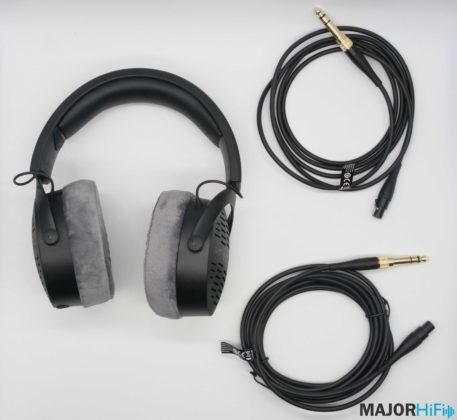
Here you see the cables you will get the end of the cable you plug into your pc has a normal 3.5mm (with 6.35mm screw on adapter) connector, so you can just use it as it is.
wijnandsj t1_j6mvo66 wrote
Your headphones come with a short and long cable with 3.5mm on one end, with a6.3mm converter included. That cable connects to the headphones with mini xlr. That's only relevant when you need a new cable
RubenRag OP t1_j6mv8pd wrote
Reply to comment by aaillustration in Finally happy with a source! by RubenRag
It’s good, I’m always annoyed at having to use a non native app for streaming services but this works quite well, there’s a tiny delay when switching screens but it’s not a deal breaker, loads of technical settings but tbh you don’t need to alter much after installing
ResponsibleOven6 t1_j6mv6zl wrote
Reply to comment by extremeelementz in Trying to understand impedance and why one headphone gets louder than the other. by extremeelementz
Impedance is how much resistance the speaker produces, sensitivity is how loud it gets given a certain amount of power. You could also think of sensitivity as efficiency.
Oversimplifying the math to illustrate this point - A headphone with a sensitivity rating of 75db will be about 75% as loud as a headphone with a sensitivity rating of 100db when connected to the same source.
A higher impedance headphone will typically sound worse, but not necessarily quieter (though often it's inherently quieter too), than a lower impedance headphone when connected to an amp that's not powerful enough to drive it. Think worse bass extension, less clarity. It still makes the noises it's supposed to but the amp is really struggling to control everything in the tight manner it's supposed to. The voice coil is also frequently able to generate a larger magnetic field from the higher impedance design, so if you've got enough power to drive it properly you COULD get better sound out of the higher impedance driver all other things being equal. The thing is they're never equal which is why there's not a "right" approach here, just tradeoffs to be made given what you're trying to accomplish.
Dani3L_1917 OP t1_j6mv1l3 wrote
Reply to comment by Chew-Magna in Why do DSD files sound better than flac? by Dani3L_1917
Thank you
fUSTERcLUCK_02 t1_j6muizb wrote
Good to see. I wonder if he's also going to improve the filtering system? It would be nice to be able to filter by price. EG, filtering headphones down to £300-£500
Chew-Magna t1_j6mugpz wrote
Reply to comment by Dani3L_1917 in Why do DSD files sound better than flac? by Dani3L_1917
Take the two files, put them in an audio program (you can probably do it with Audacity), flip the polarity of one of them. When played, if the result is silence, the two files have cancelled each other out. This would mean that they are completely identical at a digital level. It's a way of testing if there is any actual difference between two files. If they cancel each other out, it means they were identical. Exactly the same. Thus, meaning that if you think you hear a difference between them, it's pure placebo.
However, if these are different masterings as others are suggesting, then this test is moot. You end up with a different file altogether. But it could still be worth a try.
LandscapeChemical622 OP t1_j6mu919 wrote
Reply to comment by Framed-Photo in I get it. I understand now. by LandscapeChemical622
Thats good to know. I'll have to have my roommate look into it with his USB headset to see if he can get any sort of changes. But I would also assume that a USB headset still won't have the "power" of an external DAC right?
rhalf t1_j6mu8ac wrote
Reply to comment by LoneRanger21 in Decided to upgrade my DAP. by Cyodine
I had a few of these and was always impressed with sound quality. It was also quite easy to use. Cowon E2 was nice too. It didn't have the reading voice, but did have EQ presets.
AggravatedAutist t1_j6mu5ma wrote
Reply to Why do DSD files sound better than flac? by Dani3L_1917
I don't have the technical knowhow to describe why it sounds better but in my limited experience DSD sounds more like analog than PCM. I love it but it's impractical.
Framed-Photo t1_j6mtyt5 wrote
Reply to comment by LandscapeChemical622 in I get it. I understand now. by LandscapeChemical622
If it's a USB headphone then that means the headphone has it's own DAC and amp built into it. That would also mean that you can't plug it into the amp you bought though so I'm assuming that's not what you have haha.
Regardless, for any of these devices you're gonna want to make sure any audio enhancements or spatial audio things are off. You can do that even on a USB headset.
sorbuss t1_j6mtt4f wrote
It is only mini xlr in the one end of the cable
PhoenixRisingtw t1_j6mtpzw wrote
Reply to comment by Joseph_HTMP in Why do DSD files sound better than flac? by Dani3L_1917
By null test you mean blind test?
PhoenixRisingtw t1_j6mtbwq wrote
Reply to comment by PhoenixRisingtw in My favorite way to relax from it all by Cameri-
It's a nice watch tho, I have Orient as well.
PhoenixRisingtw t1_j6mt5gc wrote
Reply to comment by klogg4 in Meme I made for Monday by DanIsNotUrMan
Me with my DT 770:
You guys are getting mids?
😂
ischolarmateU t1_j6msu3t wrote
Reply to comment by superNoid in My ears have been blessed. by BleachDrinker223
They sound better on yt than spotify for some reason, at least pet sounds, i guess that spotify has worse recordings
klogg4 t1_j6msqgx wrote
Reply to comment by PhoenixRisingtw in Meme I made for Monday by DanIsNotUrMan
I can surely say that despite controversial sound signatures all Beyers rarely have any problems with mid accuracy, unlike, let's say, Audio-Technica.
Dani3L_1917 OP t1_j6mslvc wrote
Reply to comment by Titouan_Charles in Why do DSD files sound better than flac? by Dani3L_1917
That makes sense. But that would mean the studio would master the record a second time but better for dsd. If so why not just use the better master for everything instead of using different mastering for the different file. Would save time and money and result in a better end product
GLikesSteak t1_j6msix5 wrote
Reply to comment by sadplayed in What headphones are Kabosu wearing? by selective_Disclosure
Looks is a plus and the first attracting factor, but if it's utterly gorgeous but has dogshit sound, interest dies real fast
G65434-2_II t1_j6msh0p wrote
Reply to comment by Gamergtx_260 in oh chifi, never change by Nosapaw
Yeah*
^^^^*Some ^^^^restrictions ^^^^may ^^^^apply, ^^^^results ^^^^may ^^^^vary.
BleachDrinker223 OP t1_j6mwaau wrote
Reply to comment by ischolarmateU in My ears have been blessed. by BleachDrinker223
Tidal is pretty good, haven’t tried it on Youtube, will do later today, thanks for the tip!