Recent comments in /f/askscience
garry4321 t1_j8enukd wrote
Reply to comment by AdTechnical8967 in What do bacteria living in mechanical ventilation feed on ? by malahchi
What if I told you, you were MOSTLY bacteria (in terms of cell numbers)?
billyjoesam t1_j8el8b2 wrote
Reply to What makes something beautiful? People, things, places, the sky, etc. can all be beautiful but in different stylistic ways. Is it just symmetry, geometry, and colors that go well together? by Verksin
That's a fascinating subject. As humans, we tend to find symmetry in faces appealing. In photography, rules were created in accordance to what most people find appealing in a scene. That includes everything you mentioned - symmetry, geometry, color combination, as well as light. Joseph Chilton Pearce (The Crack In The Cosmic Egg, Exploring The Crack In The Cosmic Egg, The Magical Child) studied the brain, consciousness, and culture extensively and thought it is possible that the old mammalian brain contained a hologram of the earth. His hypothesis is that we are born with knowledge of the earth. It seems to me that that would include what we see and experience. It's been a long time since I've read Pearce and I'm sure I'm doing a poor job of relating his ideas. I would encourage anyone to read his work.
[deleted] t1_j8ejuu7 wrote
Aseyhe t1_j8ejbv8 wrote
Reply to comment by Any-Broccoli-3911 in In the twin paradox, what happens if the travelling twin never U-turn to get back to earth? (explanation in the post) by PoufPoal
I was referring to a toroidal universe, since its spacetime can be flat. Bringing in spacetime curvature complicates things unnecessarily!
However, the spherical universe does have a (local) preferred frame: the frame of a comoving observer.
Interesting-Month-56 t1_j8ei6vc wrote
Reply to In the twin paradox, what happens if the travelling twin never U-turn to get back to earth? (explanation in the post) by PoufPoal
Thanks for all the answers. TBH, I never understood the concept of time slowing down with acceleration, because if you choose the right reference frame, it would seem that the return trip requires the twin to experience negative acceleration. Though writing this, that’s still acceleration I guess.
My take away is that I don’t understand the framework behind relativity at all.
[deleted] t1_j8ehnhw wrote
Reply to comment by _Fuck_Im_Dead_ in If soot is highly combustible, why doesn't it burn off before it accumulates? by TheIronKurtin
[removed]
Any-Broccoli-3911 t1_j8eh54w wrote
Reply to In the twin paradox, what happens if the travelling twin never U-turn to get back to earth? (explanation in the post) by PoufPoal
The one on Earth ages more.
For the person who moves, the circumference of the universe is smaller. So he sees his twin on Earth crossing the universe in a shorter time than his twin sees him crossing the universe in the spaceship. So at the end of the travel, the spaceship twin will say that the total time passed is less than what the Earth twin will say. Both will agree on the speed the other one was going. They disagree on the total distance and the time.
Any-Broccoli-3911 t1_j8egw3r wrote
Reply to comment by Aseyhe in In the twin paradox, what happens if the travelling twin never U-turn to get back to earth? (explanation in the post) by PoufPoal
A spherical universe is one of the 3 solutions for a homogeneous and isotropic universe (flat and hyperbolic are the 2 other ones). There's no preferred frame in a spherical universe.
Still for the person who moves, the circumference of the universe is smaller. So he sees his twin on Earth crossing the universe in a shorter time than his twin sees him crossing the universe in the spaceship. So at the end of the travel, the spaceship twin will say that the total time passed is less than what the Earth twin will say.
[deleted] t1_j8efzpn wrote
[deleted] t1_j8eeu7h wrote
[removed]
CrustalTrudger t1_j8edfs9 wrote
Earthquake distributions get you most of the way there, e.g., compare the locations of earthquake with that of plate boundaries. More recently, definition and identification of individual plates (along with understanding directions of motion) have been aided by a variety of geodetic data, chiefly GPS (e.g., this map showing velocity vectors as determined by individual permanent GPS stations). With these type of data, you can relatively quickly begin to identify areas that are "torsionally rigid", i.e., their motion can be described by a single rotation (plate motions, becuase they're occurring on a sphere are best described as rotations which we can define with an Euler Pole and an angular rotation rate and direction about that pole) with deformation (as signified by earthquakes) localized along their edges and with limited internal deformation, i.e., plates.
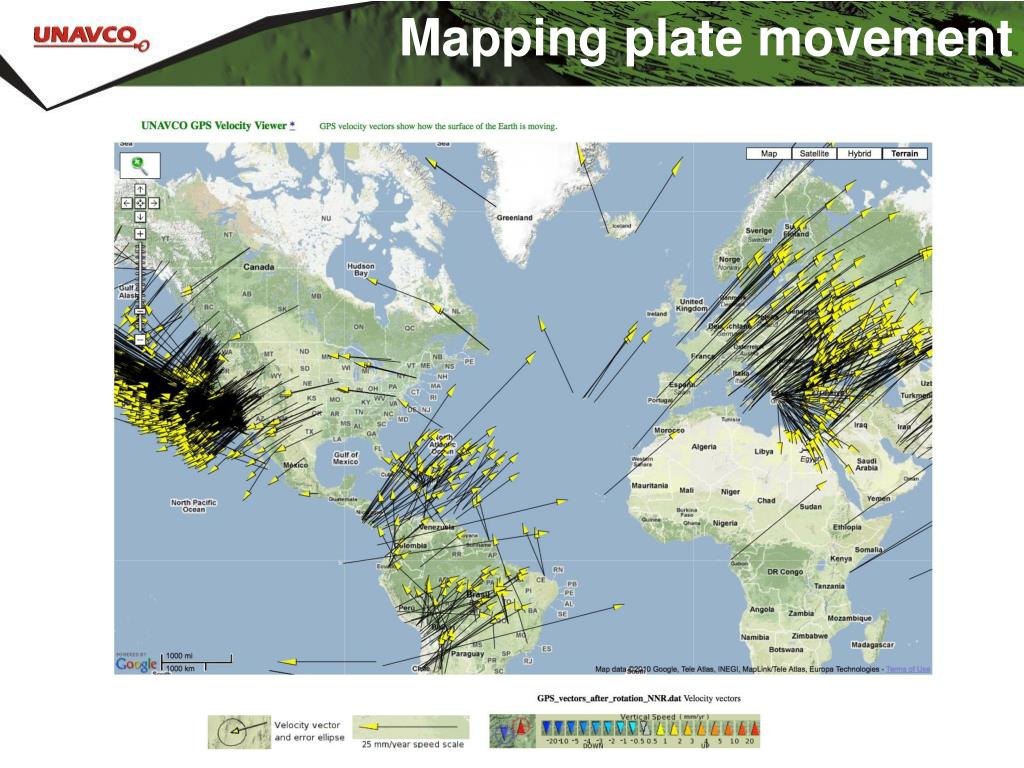
In detail though, if you look at either the distribution of earthquakes or the GPS velocity vectors, you'll see that some plate boundaries appear much more messy than others. While some boundaries (like the majority of mid-ocean ridges) are relatively distinct and effectively are represented by a single fault, many others tend to be better thought of as relatively wide zones (and this is exactly how people who study these processes describe them, i.e., plate boundary zones). Good examples of areas better described as plate boundary zones are regions like the Himalaya or much of the western United States. In these cases, we tend to pick a single large mapped structure (e.g., in portions of the the western US, the San Andreas fault) to define as the formal plate boundary, but deformation related to the plate boundary extends well beyond this single structure.
[deleted] t1_j8ecdo4 wrote
Reply to comment by desolation0 in If soot is highly combustible, why doesn't it burn off before it accumulates? by TheIronKurtin
[removed]
desolation0 t1_j8ec1qm wrote
Reply to comment by _Fuck_Im_Dead_ in If soot is highly combustible, why doesn't it burn off before it accumulates? by TheIronKurtin
As to why it doesn't burn up before leaving the fire itself? Usually that means there wasn't enough oxygen to burn with all the carbon. Oxygen is the other ingredient of making a flame. When it has left the direct flame, it then needs to be hot enough to ignite even if there is now an abundance of nearby oxygen. When you see sparkly embers up in the flame, that's a bit of hot carbon finally being close enough to some oxygen to burn.
PlaidBastard t1_j8ebej6 wrote
Reply to If soot is highly combustible, why doesn't it burn off before it accumulates? by TheIronKurtin
So, you know how there's a 'fire triangle' for combustion? Oxidizer, fuel, heat (and ignition)?
I'd say there's another one for complete combustion: even mixing of fuel and oxidizer, sufficient but not overabundance of ambient airflow to equilibrate volume change by exhaust gases from combustion reaction, and sufficiently high total concentration of oxidizer and fuel in flame environment to maintain combustion with the energy released by the reaction.
In a normal fireplace, or a gas furnace, none of these conditions are met perfectly throughout the region where combustion is happening. (It's quite good in modern, to-code gas appliances compared to a wood fire or a really sooty, misadjusted propane burner, however).
For example, that means there are regions where there are oxidizer and fuel (usually the gaseous reactants) are well mixed, but too dilute with ambient air to burn. Other regions might have too much fuel and not enough oxidizer because of turbulent mixing with the ambient air, but plenty of heat, so the fuel will undergo reducing reactions instead of oxidizing, which turns hydrocarbons into hydrogen (which will burn somewhere in the fire) and carbon (which is soot), and then that carbon is able to cool before it's mixed with enough oxygen to combust.
Imagine trying to mix two colors of cold wax in a pot on the stove just by heating it up and letting the bubbling and boiling do the work. That's about the best a wood fire can hope for in terms of even mixing of the flammable gases coming off of logs and coals with the air it needs to combust. There are all sorts of pockets of reducing and oxidizing environments in there, and as a result you get soot as well as weird, icky nitrogen compounds which give us smog etc.
Aseyhe t1_j8eashy wrote
Reply to In the twin paradox, what happens if the travelling twin never U-turn to get back to earth? (explanation in the post) by PoufPoal
It might help to realize that the elapsed time for each object is just the length of its path in spacetime. This should make it clear that there is never any ambiguity about whose elapsed time is longer. Just compare path lengths.
In the traditional twin paradox, the question is whether a straight line (twin who stays behind) or a bent line (twin who travels) is longer. The straight line is longer, due to the particular form of the spacetime metric.
In your last paragraph you are asking, what happens if we bend spacetime into a cylinder-like shape, so that time goes along the cylinder and space goes around the cylinder? There is still no ambiguity: you are now simply comparing the length of a path drawn along the cylinder with a path that circles around the cylinder like a helix.
In particular, the two twins' situations are not symmetrical because when you bend the spacetime into a cylinder, you have to choose a special reference frame. That's the frame in which spatial surfaces exactly loop back on themselves and time points exactly along the cylinder. Try physically bending a sheet of paper into a cylinder so that the edges just meet. You will probably choose to make the corners meet as well, but that is just one option. You could also offset the corners as much as you want. These different possibilities correspond to different preferred frames.
So the two twins' elapsed times will depend on how fast they are moving with respect to this preferred frame.
_Fuck_Im_Dead_ t1_j8e2g18 wrote
Reply to comment by TheIronKurtin in If soot is highly combustible, why doesn't it burn off before it accumulates? by TheIronKurtin
No problem! I definitely don't know all this because I caused a chimney fire in my own chimney. Definitely not. 🤐
atomfullerene t1_j8e2eli wrote
Reply to comment by Brownhouse71 in From where the water in ancient Mars came? by ClienteFrecuente
Hydrogen and oxygen are common elements that were widespread during the formation of the solar system. Mix them together and you get water. Most of the hydrogen was lost off the rocky planets early in the solar system's history, but some of it got bound up in rocks ( along with a lot of oxygen) where it could be later released as water
hodlboo OP t1_j8e0gh2 wrote
Reply to comment by Allfunandgaymes in What makes a strong immune system? by hodlboo
Thank you, this makes sense to me both in terms of what I understand about the body and also in terms of my own experience. I’d be curious to see data from large scale studies that link sleep to health and sickness.
[deleted] t1_j8dzfwy wrote
Reply to What makes a strong immune system? by hodlboo
[removed]
hausermaniac t1_j8dz6m0 wrote
Reply to comment by AdTechnical8967 in What do bacteria living in mechanical ventilation feed on ? by malahchi
FYI just to clarify some of the things you've said:
>All that stuff can stick to the walls of the ventilation system, creating biofilms where amoeba and other microbes can feed on
Biofilms are formed by bacteria, not the other way around. They do contribute to persistence and survival as many of the individual cells within a biofilm are not actively metabolizing, making them need fewer nutrients and making them very hard to kill
​
>Legionella lives in some of these microbes
Legionella is a microbe (gram-negative bacterium), and it can live within other organisms (like amoebae) as an intracellular parasite, but it does not necessarily have to
​
>Legionela needs Iron to survive, so they can easilly get it from the corrotion ocurring from the "weathering" of the ventilation system
Almost all bacteria need small amounts of iron (and other metals) to survive, but they don't need to be on a surface made of iron to acquire it. They can grow on surfaces made of many different types of materials
Brownhouse71 t1_j8dxvob wrote
Reply to comment by atomfullerene in From where the water in ancient Mars came? by ClienteFrecuente
Wouldn't volcanoes be emitting water already on Mars? Isn't the question how it would have gotten on/in Mars in the first place to even be emitted by the volcanoes?
ChimoEngr t1_j8dwptv wrote
Another thing about Legionella, the case that made it famous, was where it was growing in a cooling system. That involves significant changes in the air temperature, resulting in lots of condensation, making it real easy for the micro-organisms to get access to water.
AdTechnical8967 t1_j8dvxuo wrote
There is a lot of stuff floating around in the air like human skin,pollen and fungal spores among many other things. Also, unless humidity is at 0%, there will be water in the air. Humidity is high in many ventilation systems because of the aerosols they use. All that stuff can stick to the walls of the ventilation system, creating biofilms where amoeba and other microbes can feed on.
Legionella lives in some of these microbes, absorbing the nutrients they get when they "eat". Legionela needs Iron to survive, so they can easilly get it from the corrotion ocurring from the "weathering" of the ventilation system.
Unless an environment is being constantly sterilized, microbes will eventually grow. They are everywhere, some are also floating in the air around you right now.
bluexavi t1_j8epqlg wrote
Reply to comment by desolation0 in If soot is highly combustible, why doesn't it burn off before it accumulates? by TheIronKurtin
There are some good videos out there of building smokeless fire pits for your backyard that go into details about how to draw more oxygen to the fire.