Recent comments in /f/DIY
rotinom t1_j9z84j5 wrote
Reply to Replaced a rotten threshold. by DocRock2018
Yeah. That PVC looks like a heck of a trip hazard?!?
LancsMak t1_j9z6dla wrote
Reply to comment by onlym3 in Hanging heavy oak shelf on aerated concrete by Im_A_Model
Sort of. The tannins in oak will react with iron which is why stainless is recommended. You'll get unsightly black marks on the steel and the oak surrounding it.
2dP_rdg t1_j9z6bn9 wrote
Reply to Replaced a rotten threshold. by DocRock2018
what about the pvc /s
PerspectivePure2169 t1_j9z3si8 wrote
Reply to How to fix a tiny hole in couch fabric? by Kryym
Sewing?
ntyperteasy t1_j9z2fjx wrote
Reply to comment by mymook in Is there a way to just replace a sliding patio door? by dtgray12
This isn't true. The metal clad wood pella sliding doors have an easily removed/replaced sliding section so you remove it for transport and initial install and and then puck it back to check everything before putting the final fasteners into place. You definitely need delivery or access to a truck, but that's true for all of them.
You can buy Pella doors direct (with or without install) or from Lowes (in the US). The Lowe's pricing is much better than list price, and I found the pella dealer will match it, there are some features / combinations that Lowe's can't order for some reason.
I am not advocating for Pella over Anderson; just there are more choices out there.
Wide_String2861 t1_j9z0o9e wrote
Reply to How to clean stained new concrete? by Maletor
A muriatic acid based cleaner is what you’re looking for I believe. Make sure you read about safe use because, obviously, it’s an acid and a pretty strong one at that.
Should be available at your local hardware store as well.
Good luck!
nsa_reddit_monitor t1_j9yzwde wrote
Reply to comment by onlym3 in Hanging heavy oak shelf on aerated concrete by Im_A_Model
Stainless steel is stainless steel, galvanized steel is steel with a zinc coating. Stainless is much more expensive but also more resistant to corrosion than galvanized, which costs almost the same as normal steel.
Busy_Pound5010 t1_j9yz329 wrote
Nope, just throw the house out and get a new one
_theentourage t1_j9yydj1 wrote
Glazier here. If you are in the us of a. Check out CR Lawrence If in Canada. All glass parts.com or CR Lawrence
Im_A_Model OP t1_j9yu55t wrote
Reply to comment by UKthailandExpat in Hanging heavy oak shelf on aerated concrete by Im_A_Model
Thanks for the tip, that looks interesting. I will have to find out what they're called in Danish as I have never seen those before
LeTigre71 t1_j9yu0vp wrote
Laden, or unladen?
fredsam25 t1_j9yt3bn wrote
The cost will be similar to getting the the whole unit replaced.
Diligent_Nature t1_j9ysi3p wrote
Reply to comment by Old-Designer-7909 in What's the sheer strength of a 5.0 x 50mm wood screw? by Old-Designer-7909
Just trying to halp.
mymook t1_j9yrl6y wrote
If you own the home? Your best option is replace it. Anderson is your best and only option if you hope to do the job by yourself. All other sliders i have ever installed ( hundreds ) come pre-assembled and will take 2 or more people to install and a decent sized truck to transport it. Where as an Anderson slider comes in boxes (3-4) , and is easily installed by 1 person. I like their vinyl clad wood slider myself. We have 2 of them in our home. They also stand behind their lifetime warranty too. No they are not the cheapest, but they are one of the better sliding doors out there. One issue you will have to address is size, Anderson sliders are 5’10” width not 6’ like many others. I have always filled out framing to accommodate the difference, not difficult and insulate the gap is added bonus. Height is standard 80”. Anderson also guaranties parts support for 10 years from production end or at least they used to. Good luck.
onlym3 t1_j9yqwi6 wrote
Reply to comment by electricskywalker in Hanging heavy oak shelf on aerated concrete by Im_A_Model
For oak I was always told to go for stainless rather than galvanised (idk if it's a US/UK nomenclature thing) as the oak will corrode anything other than stainless, particularly if there's likely to be any water involved. I have also confirmed this through slightly painful experience!
UKthailandExpat t1_j9yq0wz wrote
Reply to comment by Total_HD in Hanging heavy oak shelf on aerated concrete by Im_A_Model
Use the correct anchors and you have no need of all that fafe
i have cabinets hanging on single French cleat battens 30mmx50mm, that hold upwards of 50kg using 3~5 3x3” screws in saw steel anchors
UKthailandExpat t1_j9ype63 wrote
While using epoxy is certainly one way of putting in anchors to aerated concrete it certainly isn’t the only or IMHO the best way.
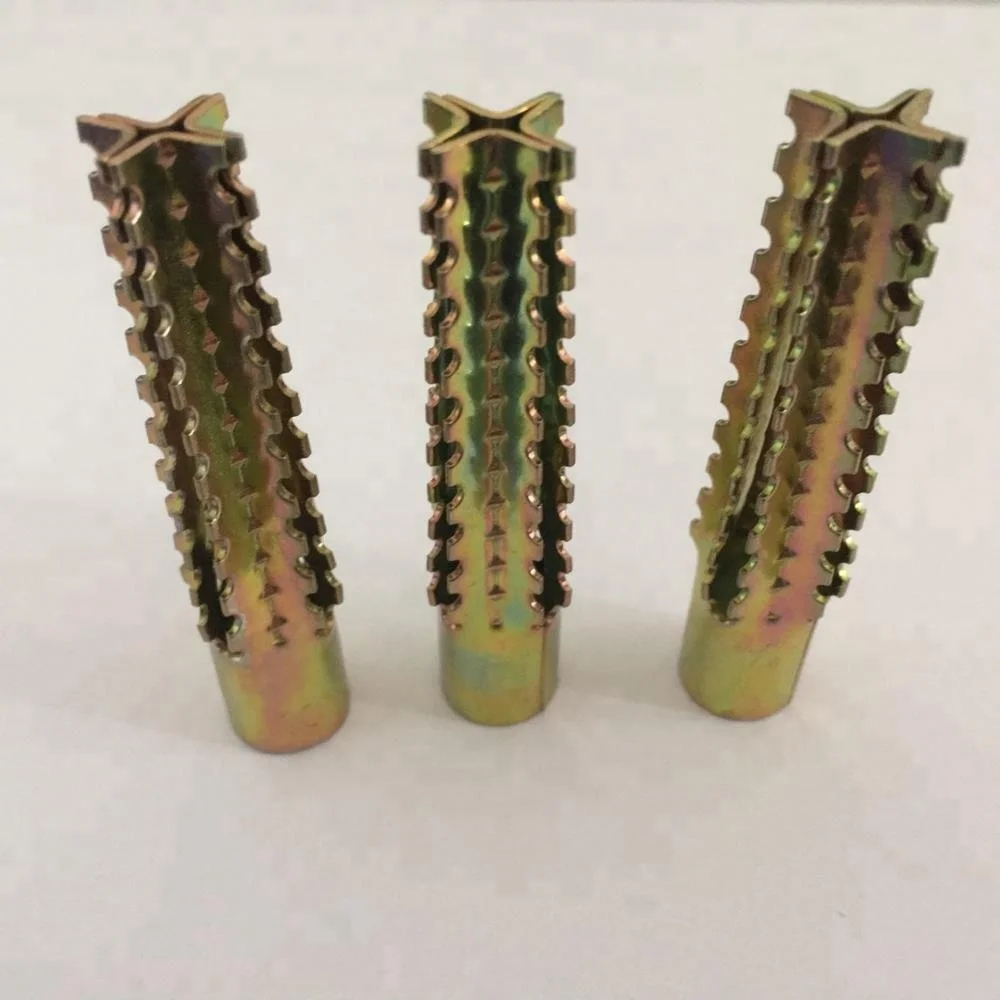
the best way is to use “saw steel anchors” they are specifically designed for AAC blocks and I have used several hundred of them. My walls are all AAC (aerated concrete)
an mage is at https://sc01.alicdn.com/kf/HTB1QHWYvTlYBeNjSszcq6zwhFXaM/200138850/HTB1QHWYvTlYBeNjSszcq6zwhFXaM.jpg
Royal_Acanthisitta51 t1_j9yolqm wrote
Reply to comment by dtgray12 in Is there a way to just replace a sliding patio door? by dtgray12
Check out YouTube videos on how to remove sliding glass door rollers.
isthisfark t1_j9yo480 wrote
Reply to comment by revtor in Hanging heavy oak shelf on aerated concrete by Im_A_Model
pull out game is strong
dtgray12 OP t1_j9ynvdd wrote
Reply to comment by Royal_Acanthisitta51 in Is there a way to just replace a sliding patio door? by dtgray12
I tried that already. Couldn't get the old ones off due to bad rust. Ended up pulling the frame to the door panel off the rubber seal.
Alone-Candidate-5377 t1_j9ynbxg wrote
I believe what you're looking for is "chemical anchor". It's a type of epoxy that's made for putting steel rods into concrete, forever.
Depending on your brackets and how much space there is inside the shelves, best would be to use chemical anchor to stick threaded rod into the holes, wait for it to cure, and then screw on the shelf brackets with nuts onto the threaded rod.
Edit: Forgot to add - the longer you can make your anchor the better. 6 inches if you can :)
dtgray12 OP t1_j9yn4m6 wrote
Reply to comment by brock_lee in Is there a way to just replace a sliding patio door? by dtgray12
I bought some rollers and a handle from HD but couldn't get my old rollers off due to the rust. I'll check the nextdoor app.
Royal_Acanthisitta51 t1_j9ymgww wrote
They sell replacement wheel kits. I think most of them are the same design.
UncleLongHair0 t1_j9ymeku wrote
We had a solid cedar fireplace mantle installed and it was interesting how they did it. They drilled holes into the brick with a masonry drill, then had rods that looked like rebar, and set them into the holes with epoxy gel. They propped them up so they'd be somewhat level. Once they set, they drilled holes into the back side of the mantle, coated the protruding pegs with glue, and set it in place.
This is a gotta-get-it-right-the-first-time kind of thing but might work for your situation.
Fuzzy_Chom t1_j9za7rn wrote
Reply to Hanging heavy bookcase over sideboard. Will this work? by toasterstrewdal
IMHO, i think you're on track. That being said....
Personally, when i have heavy cabinets to mount (garage), i like using a wide French cleat to support the weight. Not sure if it makes a huge difference, but i think about the cleat being mounted across the cabinet, as well as two lags per stud across the whole width, as means of distributing the weight. Is it necessary? Dunno, but i like to over build a bit, not knowing how well each lag is biting into a stud and not knowing exactly how the structure will be used long term.