Recent comments in /f/DIY
FerretChrist t1_j2o25qa wrote
Reply to comment by sunflowercompass in How many of these recessed lights can I use on a dimmer switch? by notscammed
I have Philips Hue bulbs throughout the house. The app is pretty decent when you want to dive in and edit colours and scenes, but I couldn't live using it day to day just to turn on and off the lights, that would be insanity.
I've attached "Hue Wireless Dimmer" controls next to every light switch. They turn the lights on and off, cycle through different scenes, or turn up/down the brightness. Best of all, they attach magnetically, so you can pull them off the wall and control the lights while you're sat down.
The only downside (except the price!) is they're battery powered, but I've had them in for two years now and not needed to change a battery yet.
Tack122 t1_j2o0yr2 wrote
Reply to comment by LavenderGumes in How many of these recessed lights can I use on a dimmer switch? by notscammed
I use that with my dimmers, but what I'd also like is to regrade the scale.
I use the app on my phone and have my lights set to minimum 20% on the low end trim thing, but I only really get dimming between say 50% and 20%, and the low 20%s are nice for night time, low light.
But it's fiddly when the bar has 20-100% on it, and you're only trying to use a tiny section of it.
I wish I could increase the size of each setting from 20-30 relative to the size of 70%-100%. 70% to 100% looks about the same without a light meter so the difference is relatively unimportant.
ZeroMayCry7 t1_j2o0t89 wrote
Reply to comment by BigSmokeyTheBear in How many of these recessed lights can I use on a dimmer switch? by notscammed
Yup. My friends new house has new recessed lights that are a bright white and it does not feel homey at all
coyote_of_the_month t1_j2o07jh wrote
Reply to comment by BigSmokeyTheBear in How many of these recessed lights can I use on a dimmer switch? by notscammed
When we bought our house last year, it was yellow-biege, including ceilings, and was mostly lit with honest to God incandescent bulbs.
We painted it a cool off-white and went overboard with 5000K daylight bulbs, if I'm being honest. It made such a difference! Our close friends haven't been shy about saying they hate it though, and I'm coming around to maybe buying some 3000K bulbs as the memories of the beige start to fade.
mint_me t1_j2nzctc wrote
Reply to comment by MeshColour in How many of these recessed lights can I use on a dimmer switch? by notscammed
Yeah I was gonna edit my reply but meh I mean it would be interesting to see 71 leds on a single dimmer but really 20 would be a hard limit. Yes reactive loads etc etc
argon561 t1_j2nzb61 wrote
Reply to comment by NCaliZen in How many of these recessed lights can I use on a dimmer switch? by notscammed
It's correct that the inrush current is the MAIN problem with LED lighting.. Though it should be noted that most dimmers now actually circumvents this problem by trickle charging the LED-driver capacitors, and by doing this, can absolutely handle the continuous wattage specification.
It's quite easy to check if you have such a dimmer (or LED-driver for that matter).
Turn the lights off. Let them stay off a couple of seconds.
Turn them on. If they don't respond IMMEDEATELY when the button on the dimmer is clicked (like they do when shut off), the dimmer is "trickle charging" the capacitors with it's own circuitry. When the inrush current goes below a threshold that is acceptable, the lights will turn on and "full power" is fed to the lights.
This can also be noticed if a LED "gradually gets bright", and not "direct full brightness" when it's switched on.
If it's a very old control device / dimmer, it might not have this feature, and on those, you'd be best of by dividing it's rating by at least 10.
ItsGermany t1_j2nxtle wrote
Reply to Something is causing CO2 buildup in part of the house- how do I secure the windows so I can ventilate it? by [deleted]
Why isn't the OP responding??? Either he is still at work not heeding all these clear warnings, or he went home and closed the door behind him......
Raul_McCai t1_j2nx74n wrote
Reply to comment by Redthemagnificent in How many of these recessed lights can I use on a dimmer switch? by notscammed
> Dimmers don't work by limiting the number of watts. They work by reducing the AC voltage going to the lights.
That might be an old rheostat dimmer. Modern ones turn the power on and off at a rate so fast you don't see it to produce the dimming effect.
velifer t1_j2nx0n4 wrote
Reply to comment by Riegel_Haribo in How many of these recessed lights can I use on a dimmer switch? by notscammed
>No they aren't
How strange that some I've removed from my older house were rheostats, exactly as described. Maybe you could consider there are houses built before 2010.
You're ill-informed.
rotary rheostats were extremely common and fit into standard work boxes.
Raul_McCai t1_j2nwygi wrote
I am assuming this is a 120 VAC line and the bulbs have a circuit in them that conditions the electricity to the LED's needs.
So - - Probably a hell of a lot of them. What's the Forward voltage of the LEDs?
The Kelven is irrelevant. In fact all those other numbers are irrelevant.
One thing I've learned dimming LEDS is that you need (at least you used to) a conventional load on a conventional dimmer. It can be a s little as a 15 Watt bulb but the dimmers need to see a regular load od they won't shut down and will flicker.
I haven't had any experience with the newer dimmers that are made for just LED loads. Leutron makes some
MRToddMartin t1_j2nwk41 wrote
Reply to Something is causing CO2 buildup in part of the house- how do I secure the windows so I can ventilate it? by [deleted]
Ummm. You need to GTFO first. Then you need to find out why the co2 is there in the first place and fix that. You don’t just cover it up. Bad idea. You’ll go to bed one night and never wake up.
georgecm12 t1_j2nvstx wrote
Reply to comment by thirdeyefish in Something is causing CO2 buildup in part of the house- how do I secure the windows so I can ventilate it? by [deleted]
>Is anyone considering that OP has a problem with CO2, as posted?
Not really, because CO2 detectors are generally not a thing. They exist, but are very much a specialty industrial device used where there is a lot of carbon dioxide in use. (For example, a storage room in a restaurant that contains carbon dioxide tanks for use with soda fountains.)
kittenrice t1_j2nvjr1 wrote
Reply to comment by thirdeyefish in Something is causing CO2 buildup in part of the house- how do I secure the windows so I can ventilate it? by [deleted]
CO alarms are commonly installed in homes, CO2 alarms are not.
CO2 is a common misspelling of CO. So common that google just assumes you're an idiot and gives you results for CO alarms.
OP has a CO problem. Possibly a cracked heat exchanger, if they have a forced air furnace. Or a bad flue pipe, or negative pressure pulling exhaust back inside the home.
DrkMgk t1_j2nvc9g wrote
Reply to comment by 1955photo in Something is causing CO2 buildup in part of the house- how do I secure the windows so I can ventilate it? by [deleted]
Love me some good, well placed oxymorons.
StillWill18 t1_j2nub3f wrote
No idea. We have them on in fours. Was never a problem. I don’t see why 6 wouldn’t work, too.
LateralThinkerer t1_j2nu5u0 wrote
Reply to comment by _ALLien_ in How many of these recessed lights can I use on a dimmer switch? by notscammed
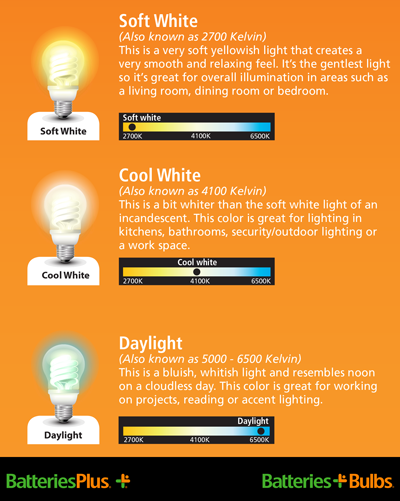
3000K - 4000K FTW depending on where you're using it. Work areas you might actually like the "harder" 4000K or more but for interior domestic areas the lower color temperature is best. Also don't be afraid to actually check out lit bulbs in a big-box store if you can...manufacturers will fudge their color temperatures sometimes though this becoming is less common. Source: Light nerd who's refitting his house away from fluorescents.
jek39 t1_j2nu5sw wrote
Reply to Something is causing CO2 buildup in part of the house- how do I secure the windows so I can ventilate it? by [deleted]
that's a CO alarm, not a CO2 alarm.
Cloakmyquestions t1_j2ntkhn wrote
I heard that some dimmers might work less flakily with more lights on them (within reason). Thoughts?
theidleidol t1_j2nt61p wrote
Reply to comment by gregaustex in How many of these recessed lights can I use on a dimmer switch? by notscammed
I don’t think they’re confused by the “100W equivalent” part. They’re asking about the limits marked on the switch. The reason it lists both is that the dimmer is genuinely rated for a smaller LED load than it’s rated for an incandescent load. But then they also looked it up and found the rough formula for calculating that derating yourself (in the event it’s an older switch or whatever that hasn’t already done the LED math for you) and got confused.
Diligent_Nature t1_j2nswpx wrote
Reply to Something is causing CO2 buildup in part of the house- how do I secure the windows so I can ventilate it? by [deleted]
You can get security grates for windows, but that is not the solution. Shut off all gas powered appliances immediately. Get the leak fixed NOW.
Mr-Thumpasaurus t1_j2nshgq wrote
Reply to comment by sunflowercompass in How many of these recessed lights can I use on a dimmer switch? by notscammed
Valid points, just wanted to note, the Philips Warm Glow bulbs I mentioned are not smart bulbs, they're dumb bulbs that dim in a kinda smart way
https://www.usa.lighting.philips.com/consumer/choose-a-bulb/warm-glow-dimmable-led-lighting
You still need a physical dimmer etc, you can dim them as your evening progresses to help cut out the blue light
NCaliZen t1_j2nscst wrote
The issue with LED fixtures is that they can have a significant amount of inrush - current that comes through the device when it is initially turned on. That inrush can destroy your control device.
(Note: This isn’t the first time something like this happened in the industry. When the industry moved from magnetic ballasts to electronic ballasts for fluorescent lamps, the new ballasts had a significantly higher inrush. A side effect was some manufacturer’s wall switch devices couldn’t handle the inrush and would be destroyed. The National Electrical Manufacturer’s Association (NEMA) worked on a standard to define an acceptable amount of inrush, but by the time the NEMA 410 inrush standard was developed, electronic ballast manufacturers had mostly redesigned their product to reduce inrush. History just repeated itself with the introduction of LED lighting.)
If you had a dimmer that didn’t call out a LED rating, the safest thing to do would be to divide it’s rating by 10, so a 600W dimmer shouldn’t control more than 60W of LEDs.
However, since the dimmer you have calls out a 150W LED rating, you should be fine loading it with - in your given example - 84W.
edwa6040 t1_j2nrwn7 wrote
Reply to Something is causing CO2 buildup in part of the house- how do I secure the windows so I can ventilate it? by [deleted]
Thats not CO2 it CO. carbon monoxide. Its probably your furnace - you should have that addressed by professionals right away. This is not something to diy.
People die from CO poisoning in their homes.
knowitallz t1_j2nre6d wrote
You need to try this dimmer with those lights and see if it works. Many times the dimmer will make them flicker when they are dimmed. You may need a different dimmer.
Riegel_Haribo t1_j2o3132 wrote
Reply to comment by velifer in How many of these recessed lights can I use on a dimmer switch? by notscammed
Maybe YOU should consider solid-state SCR dimmers were in use since 1961: https://www.architectmagazine.com/technology/lighting/the-solid-state-electronic-dimmer_o
edit: amazing how many button-pushers don't realize the the nonsense they are upvoting above. Dimming lighting with a variable resistor in a utility box would be a ridiculous hazard. At particular setting you can have made a voltage divider with as much power dissipation in the box as from the total of incandescent light fixtures.